

A Customer-Centric
Booking ExperienceFrom mountain to seaside or countryside, Locatour offers an extensive choice of holiday stays everywhere in France at attractive prices. With the emergence of price comparison tools, today's customers tend to be more autonomous in their search. Locatour must therefore continuously experiment, adapt and innovate to respond to their needs beyond purely economic considerations.
In this regard, collaboration across all of Locatour's internal teams helped define KPIs. Part of my work on this project involved identifying each step of the user flow to improve the overall experience (Discover, Select, Book), achieved by defining four personas that represent key segments of our target audience.
Personas
Understanding User’s Needs
Recognizing that no single booking flow fits all travelers, user research was conducted to identify the core drivers of decision-making. This revealed two critical variables: date flexibility and price sensitivity.
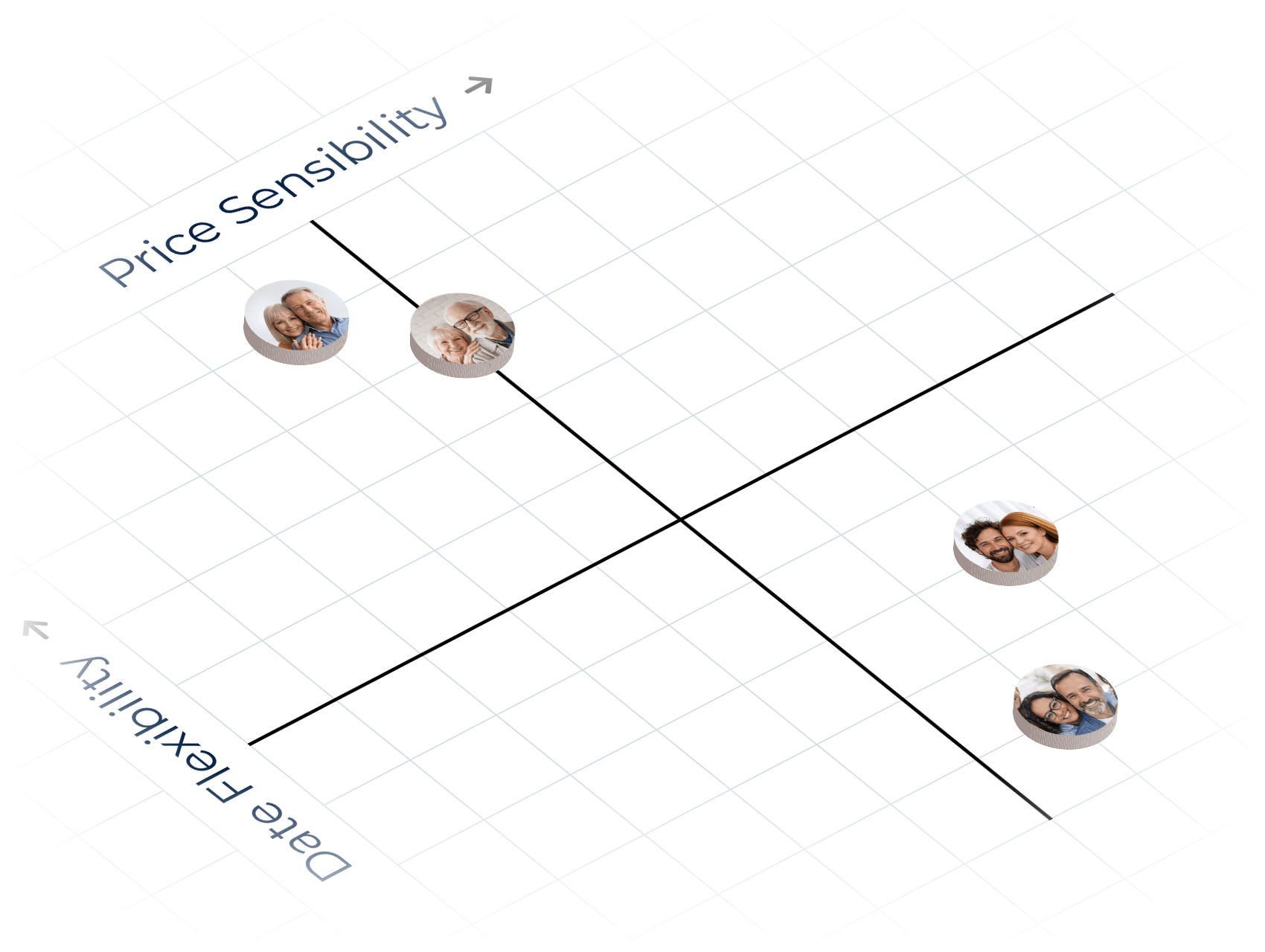
In today’s market, flexibility has become the ultimate currency for travelers looking to optimize their budget. Mapping these two variables revealed a clear divide between users constrained by fixed schedules (who must navigate high-season pricing) and those who leverage their flexible calendars to seek out value and quality off-season. This analysis allowed for the identification of four distinct user archetypes.
 The Organized Family
Profil
- Situation: Married couple, 2 children (8 and 11), middle-class, Île-de-France
- Income: ~€4,500 net per month combined
- Technology: Smartphones + computer, comfortable using online comparison tools
Goals
- Book early (from January/February for summer) to ensure availability and better prices
- Keep full budget under control with a bundled, transparent offer
- Stay by the sea in summer and in the mountains in winter, in a family-friendly setting
Frustrations
- Prices skyrocketing during school holidays
- Unclear offers about what’s included (linens, cleaning, pets allowed)
- Too few or unreliable reviews for family accommodations
Online behavior
- Compares across multiple platforms before confirming
- Responsive to “early booking” deals and cancellation guarantees
- Reads parent-focused reviews first; decisions are often made as a family
Key features
- Built-in school-holiday filters: automatic selection of holiday periods by zone (A, B, C) to show only matching availability
- Transparent price breakdown: display the total cost (linens, cleaning, tourist tax) directly on the property page, with no surprises at checkout
- “Early booking” badge highlighted with a gentle countdown (no aggressive pressure) to encourage early reservations
- “Family” filtered reviews section on each listing, including the number and age of children from previous reviewers
 The Blended Family
Profil
- Situation: Blended couple, 4 children aged 7 to 15, professionals/managers, Auvergne–Rhône-Alpes region
- Income: ~€6,000 net/month for the household — high budget but with complex trade-offs
- Technology: Multi-device, highly connected
Goals
- Find a spacious accommodation that can host 6 people or more
- Balance the expectations of children of very different ages (young kids vs. teens) within the same trip
- Create strong shared memories that reinforce family cohesion
Frustrations
- Accommodations capped at 4–5 people, not suited to their family setup
- Alternating custody schedules that make available dates more rigid
- Kids’ activities that only cater to one age group
Online behavior
- Primarily uses “number of guests” and “amenities” filters
- Checks photos carefully to assess the real size of the place
- Teens actively influence the final choice: the decision is collective
Key features
- “Number of guests” filter extended up to 8+, highlighted on the homepage and not hidden in advanced options
- Date-selection tool based on custody availability: ability to block/select several alternative time slots to compare availability
- Annotated photo gallery: each photo shows the room size and bed setup (e.g., “Bedroom 3 — 2 single beds + 1 double bed”)
- “Activities by age group” tab on each listing, so they can instantly see what each child can do
 The Loyal Seniors
Profil
- Situation: Retired for several years, calm lifestyle, living outside major cities (Brittany, Centre)
- Income: ~€2,800 net/month for two — careful budget management
- Technology: Limited and cautious internet use; they prefer simple interfaces
Goals
- Go on a long stay (1 to 2 weeks) in comfortable accommodations with included services
- Travel within France to stay in a familiar, reassuring environment
- Get human support during booking (phone or chat)
Frustrations
- Fast booking funnels with countdown timers or too many steps
- No visible human contact (phone number hard to find)
- Offers perceived as “too young” or overly focused on families with children
Online behavior
- Mostly book on a computer, after a phone call
- Recommendations from friends/family are the primary purchase trigger
- Very loyal if the first experience is positive: they come back systematically
Key features
- Phone number always visible in the header, with clearly stated calling hours
- Clean, uncluttered interface: few on-screen options, larger font sizes, big well-spaced buttons — compatible with browser accessibility settings
- Booking process in 3 steps max, with a visible progress bar and the ability to save the cart and resume later
- Simplified “My bookings” area with one-click access to documents (confirmation, invoice, itinerary), without complex navigation
 The Active & Independent Senior
Profil
- Situation: Active young retirees, in good health, financially comfortable, living in a major city (Lyon, Bordeaux)
- Income: ~€3,800/month net for two — average holiday budget of €2,200 per trip
- Technology: Comfortable online; compare options and read reviews independently
Goals
- Take multiple short to mid-length trips in the off-season to benefit from lower prices and avoid crowds
- Explore less touristy regions in France, with high-quality accommodation
- Get flexible cancellation insurance — top priority for this profile
Frustrations
- Offers overly targeted at “families,” ignoring their specific needs
- Lack of information about real accessibility (parking, elevator, distance to shops)
- Promotions only valid in peak season, which they deliberately avoid
Online behavior
- Start planning the following year’s trips as early as September, especially winter breaks
- Check multiple sources (reviews, blogs, official websites) before booking on a computer
- Potentially 5–6 bookings per year: a high long-term value segment for Locatour
Key features
- Dedicated “off-season” filter with immediate display of price differences between high and low season to highlight the value of their choice
- Interactive regional map to explore lesser-known destinations, with crowd/occupancy levels shown by time period
- Cancellation insurance module integrated directly into each property listing, with conditions readable in two lines (no redirect to 10-page T&Cs)
- Visible loyalty program: trip counter, unlocked benefits, and next milestone — since they can book up to 6 trips a year, loyalty is a major lever

Step 1 – Discover
Simplifying decision-making
→ KPI: Time on Task · Search Field Usage · Bounce Rate
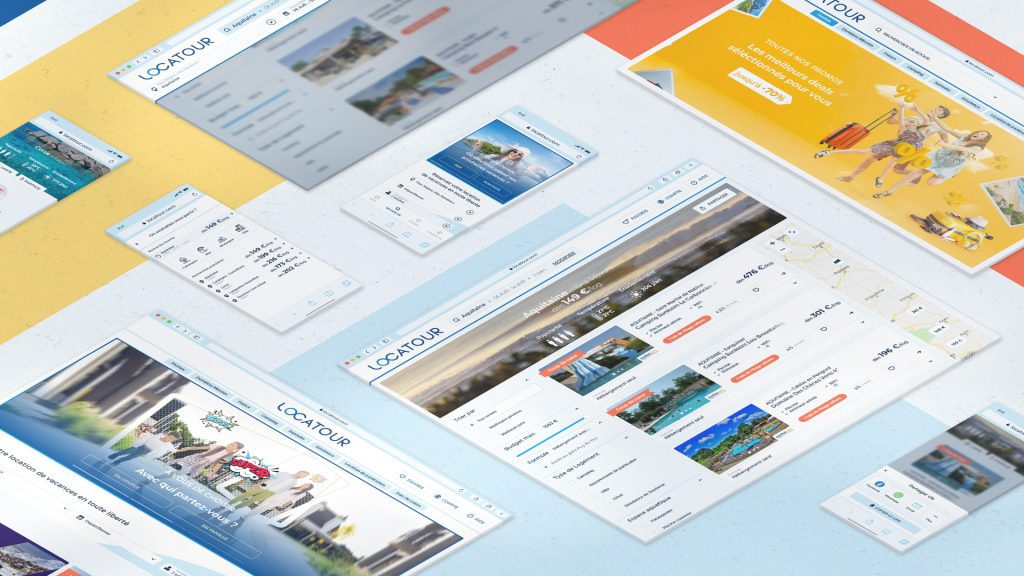
With over 50,000 offers to explore, choosing the right holiday is not a simple task. The challenge at this stage was to make discovery more intuitive by reducing the time needed to assess the offer, encouraging effective use of search and filtering, and limiting drop-off from the first interactions.
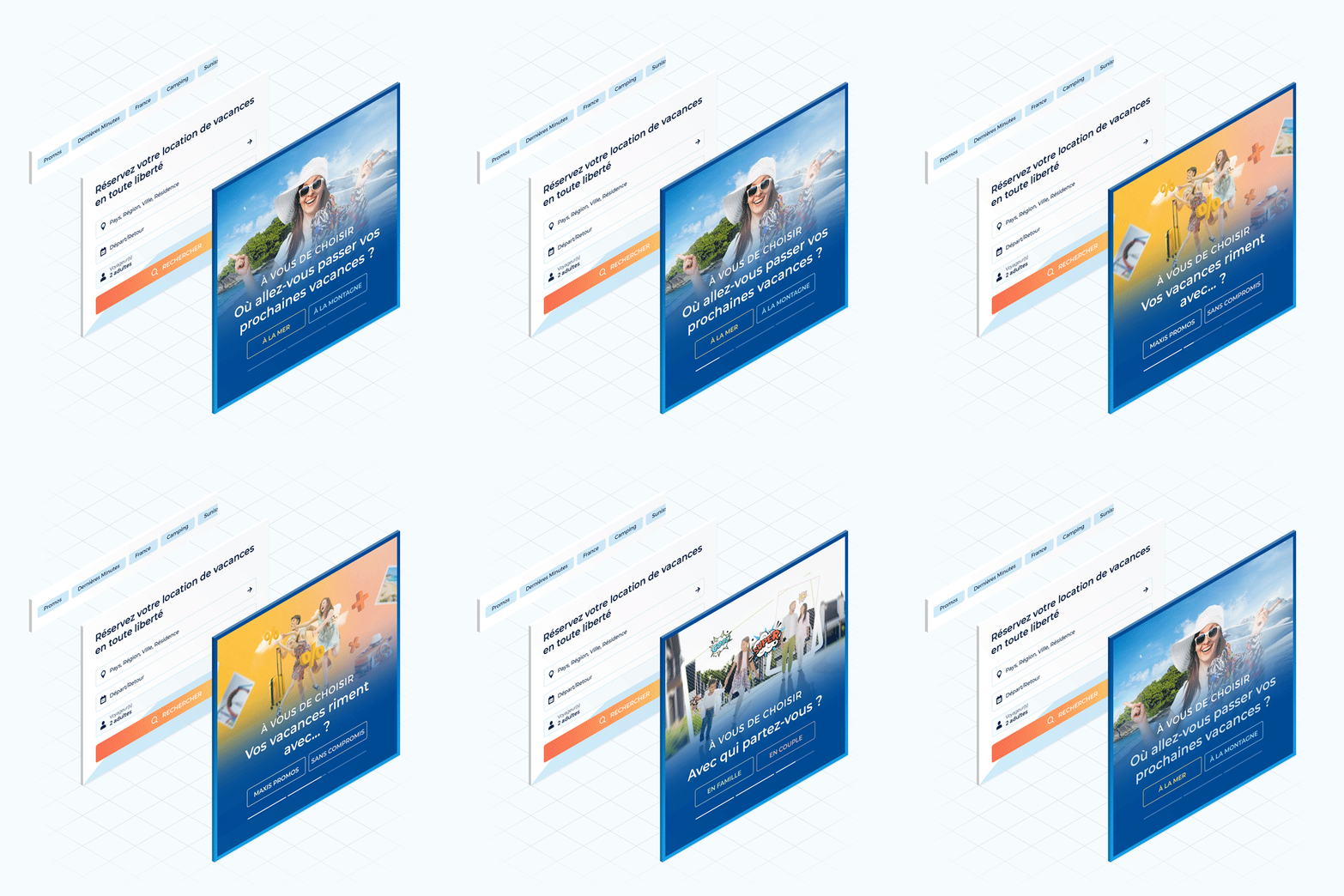
As a first step, users are presented with a frictionless, Tinder-style binary choice (e.g., Sea vs. Mountain, Couples vs. Family). This playful approach requires no effort beyond a simple click on option A or B, significantly lowering the cognitive load and resulting in high initial engagement.
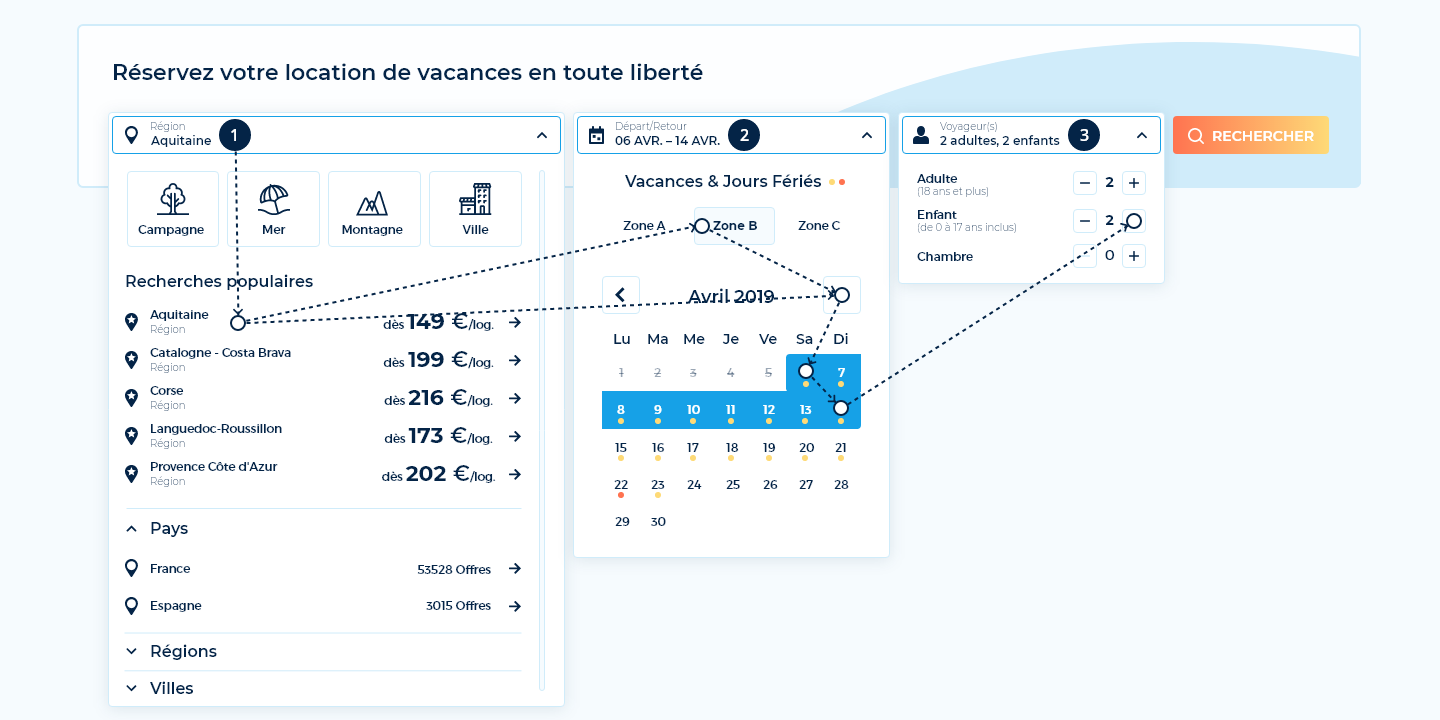
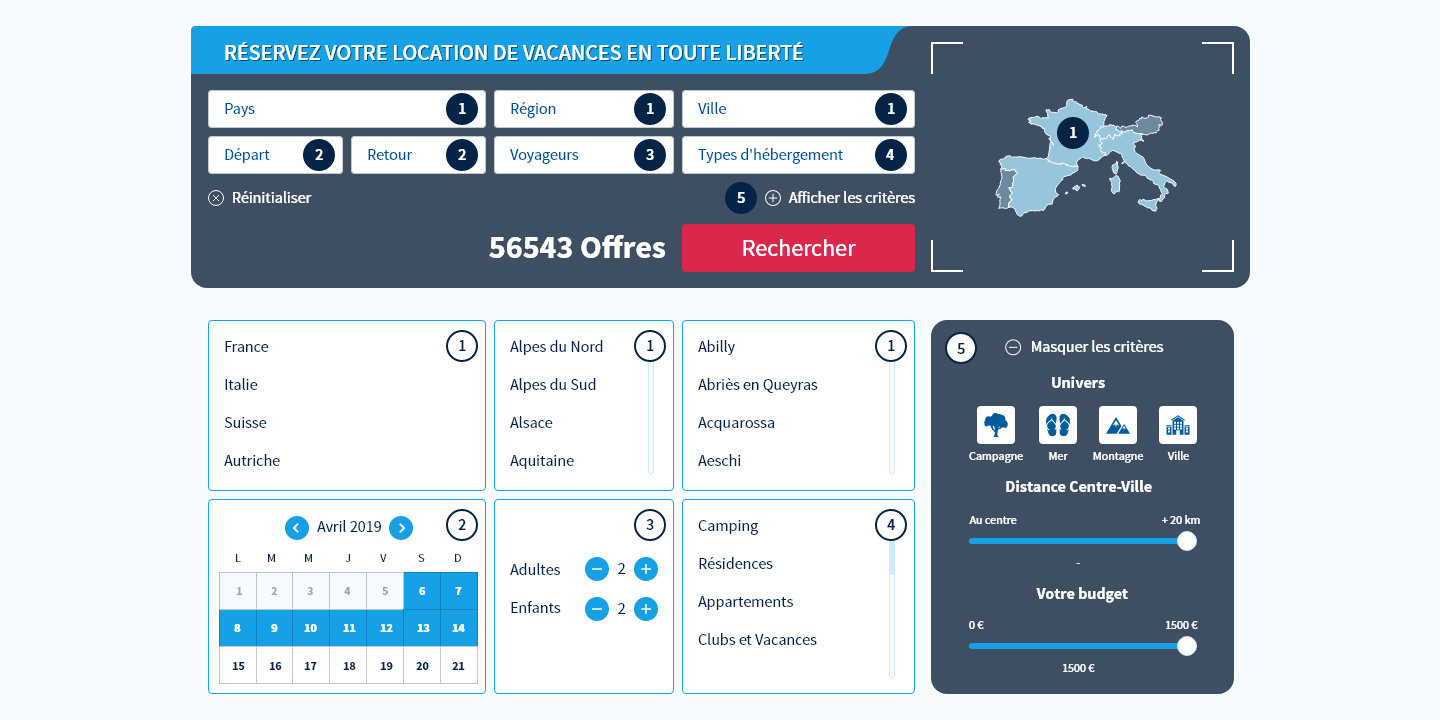
Here, the legacy search engine was overwhelming, requiring users to fill out up to 7 distinct fields (Country, Region, City, Dates, Guests, etc.). To reduce friction, the process was consolidated into just 3 core inputs: Where to go? When? With whom?
While drastically reducing the number of fields, the remaining inputs were enriched with valuable contextual data. The destination field now features popular locations with starting prices, the date picker highlights school holidays, and the guest selection explicitly defines room requirements.
Step 2 – Select
Fostering retention
→ KPI: Pages per Session · Add-to-Cart Rate · Feature Adoption Rate
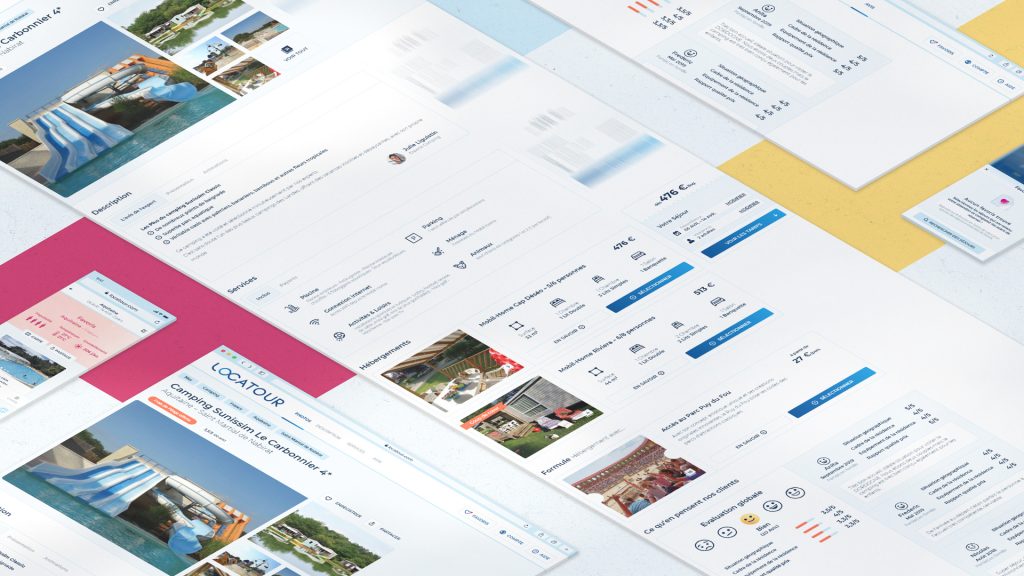
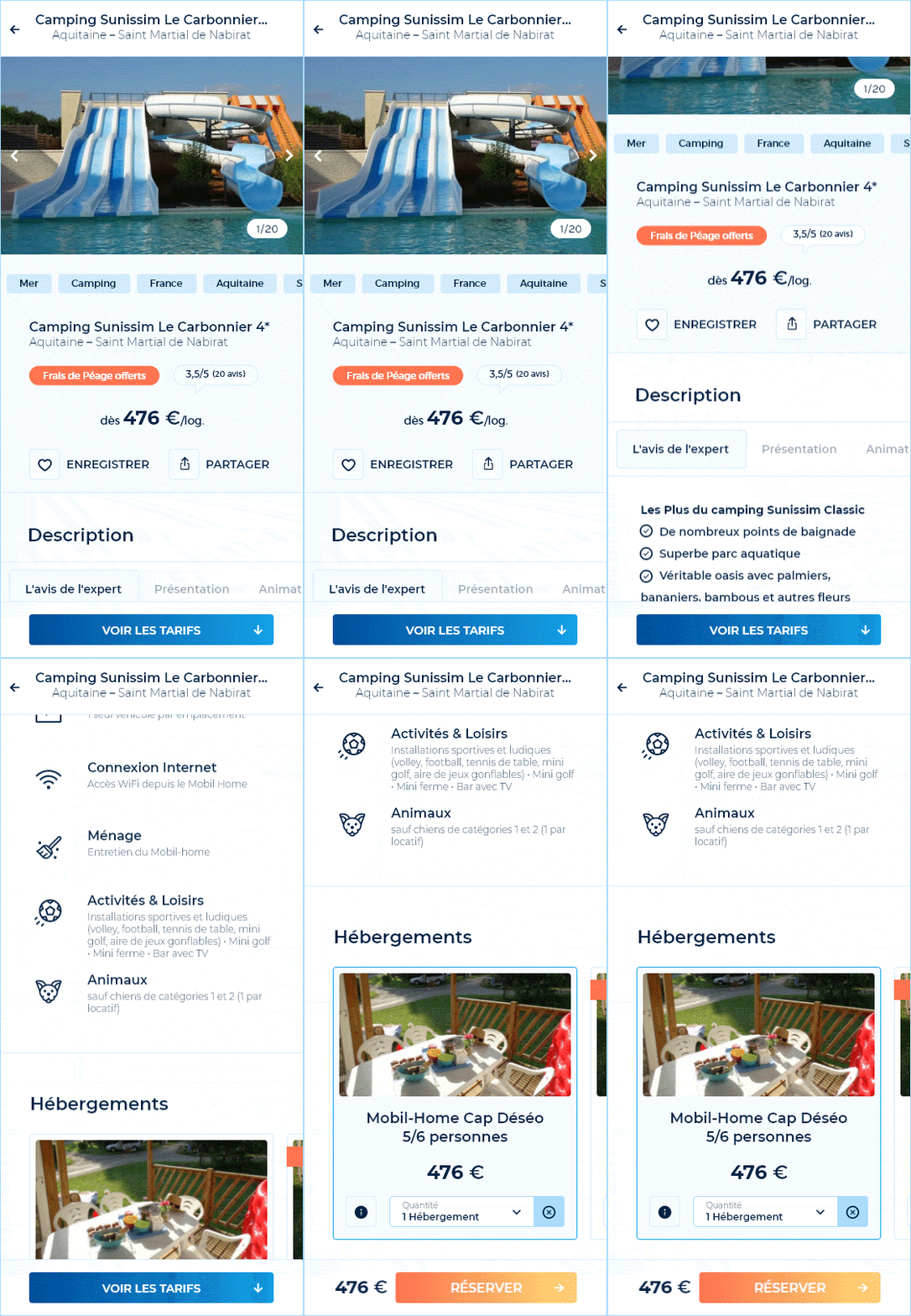
To convert exploratory users, the interface must encourage deep browsing and comparison. In the travel industry, booking is rarely an impulsive act; it requires evaluating budgets, coordinating with partners, and returning to the site multiple times. Recognizing this high drop-off risk, the goal was to eliminate the frustration of starting over by providing intuitive features that allow users to seamlessly save, compare, and resume their journey exactly where they left off.

Recent Search Shortcuts
Integrated directly into the search bar, these shortcuts retrieve previous search parameters in a single click, eliminating repetitive data entry.

Wishlist & Comparison Hub
A dedicated environment that allows users to seamlessly save and compare accommodations against key metrics (e.g., proximity to the beach).
Step 3 – Book
Reinforcing trust
→ KPI: Checkout Conversion Rate · Cart Abandonment Rate · Error Rate in Forms
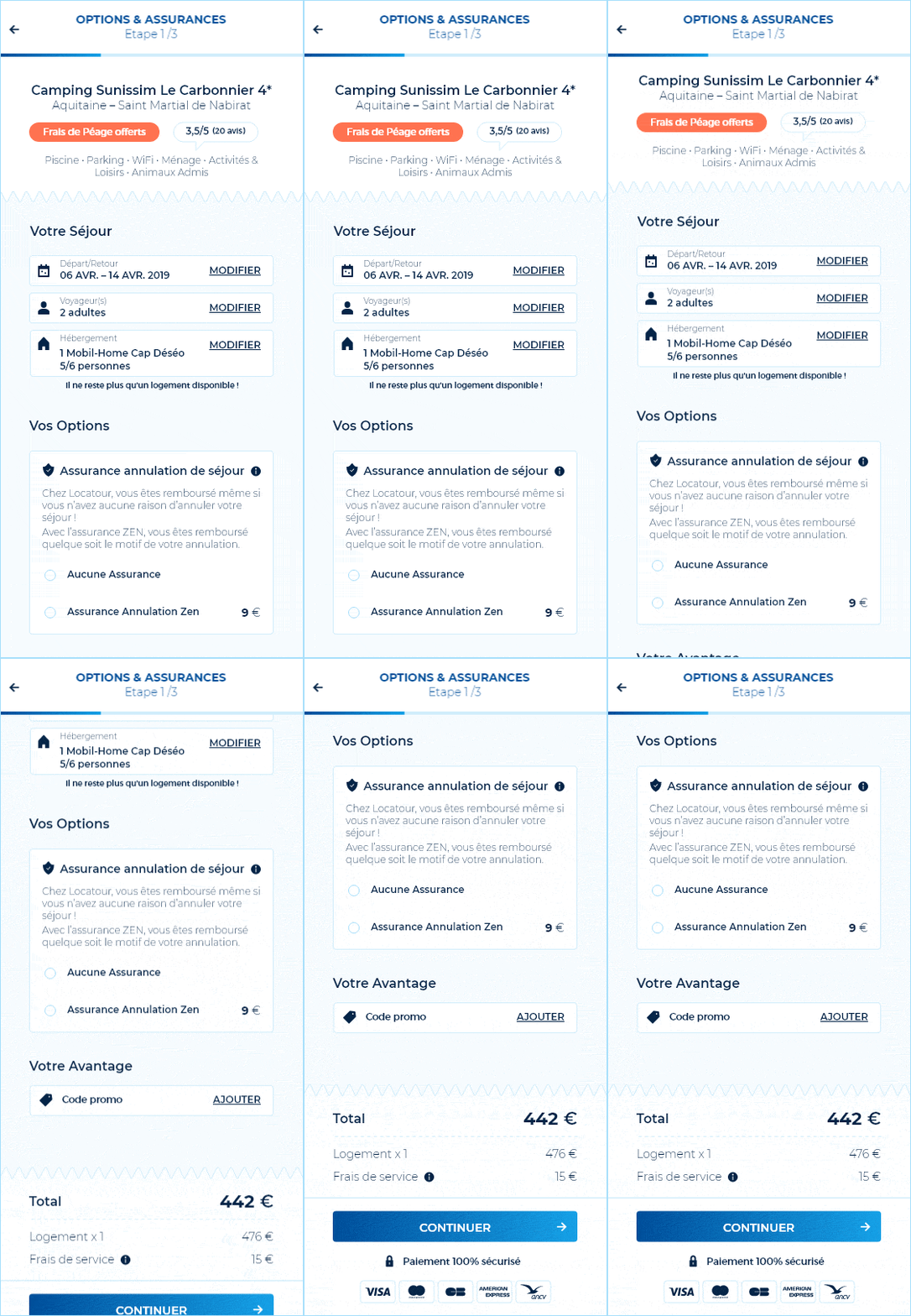
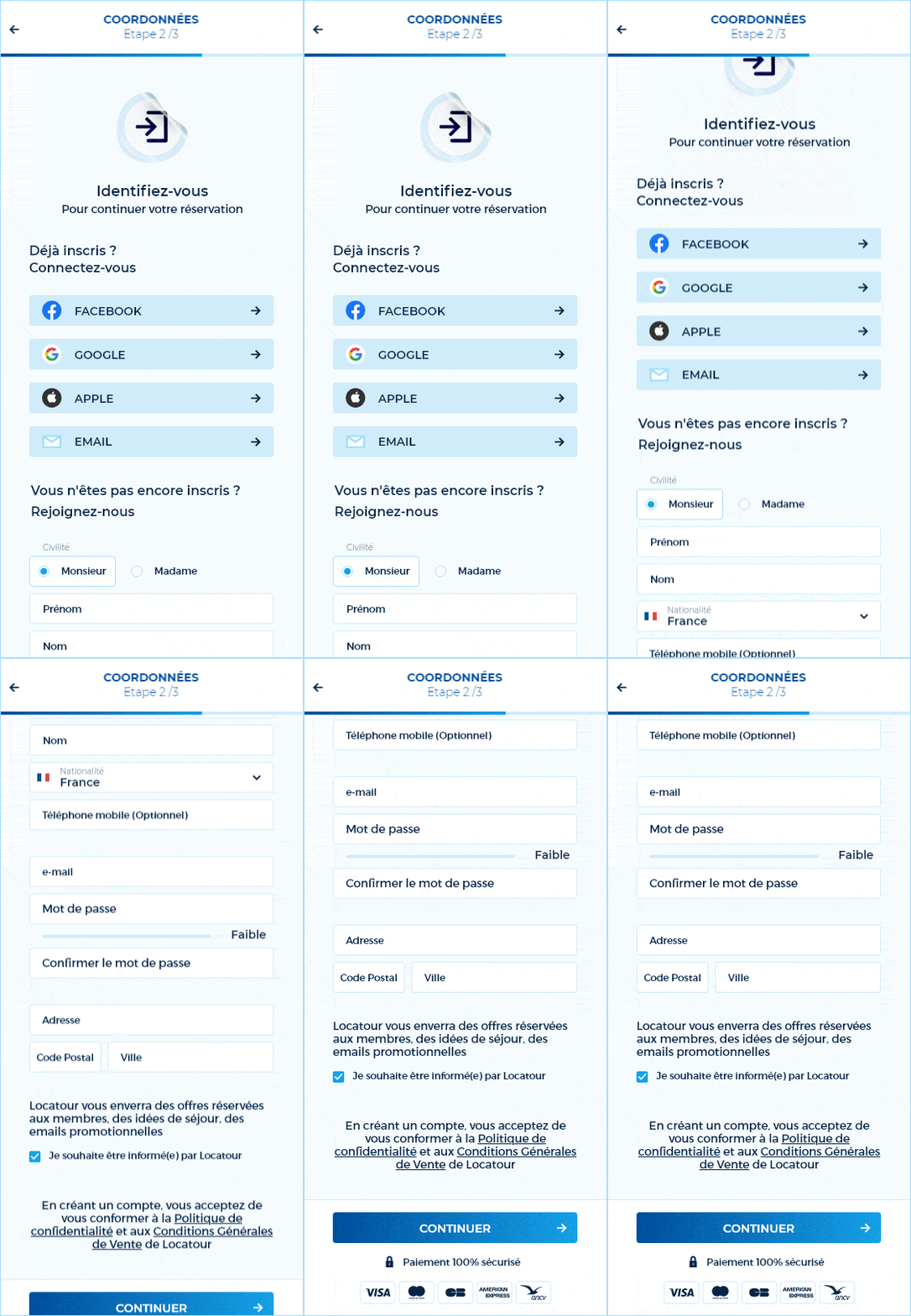
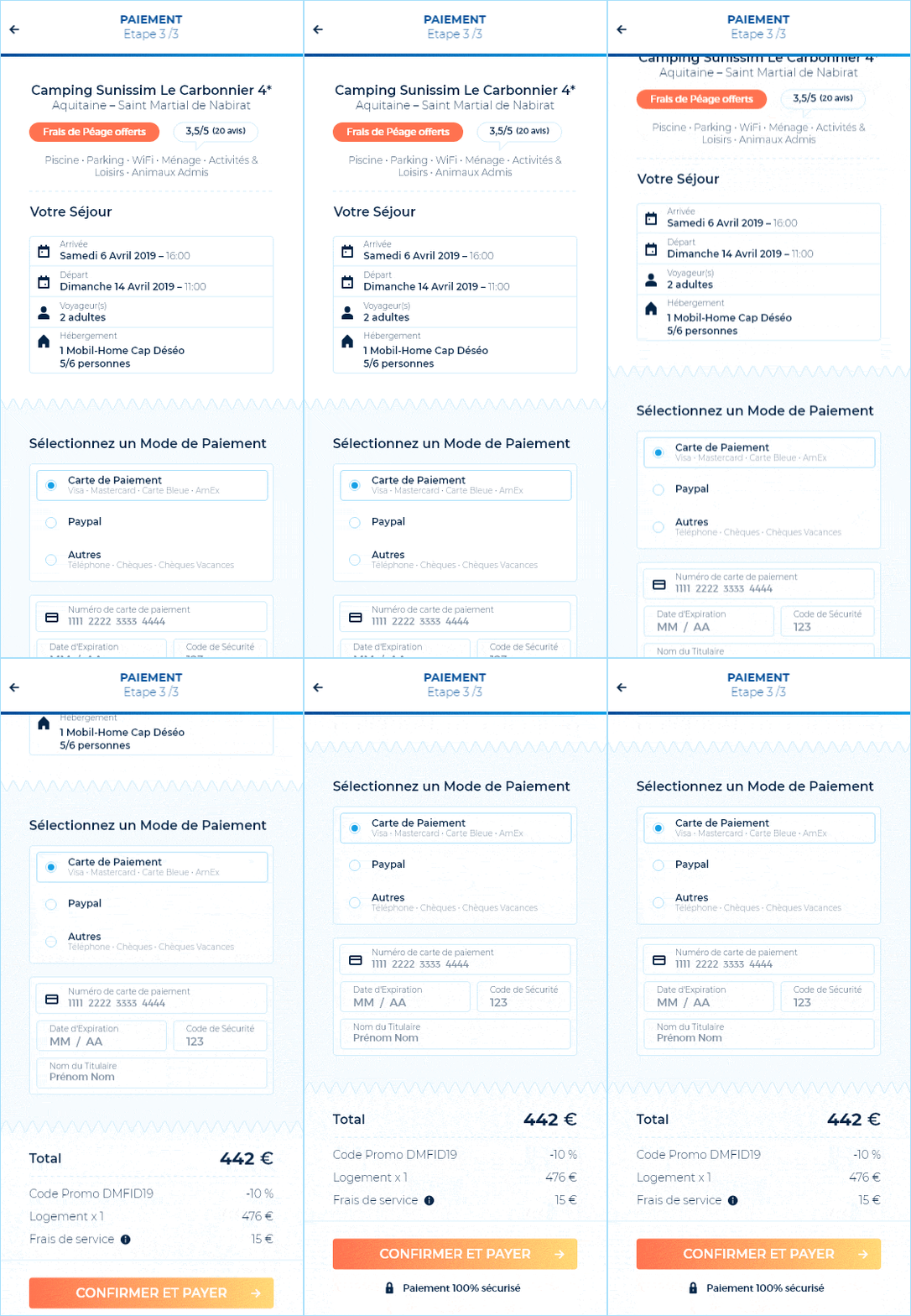
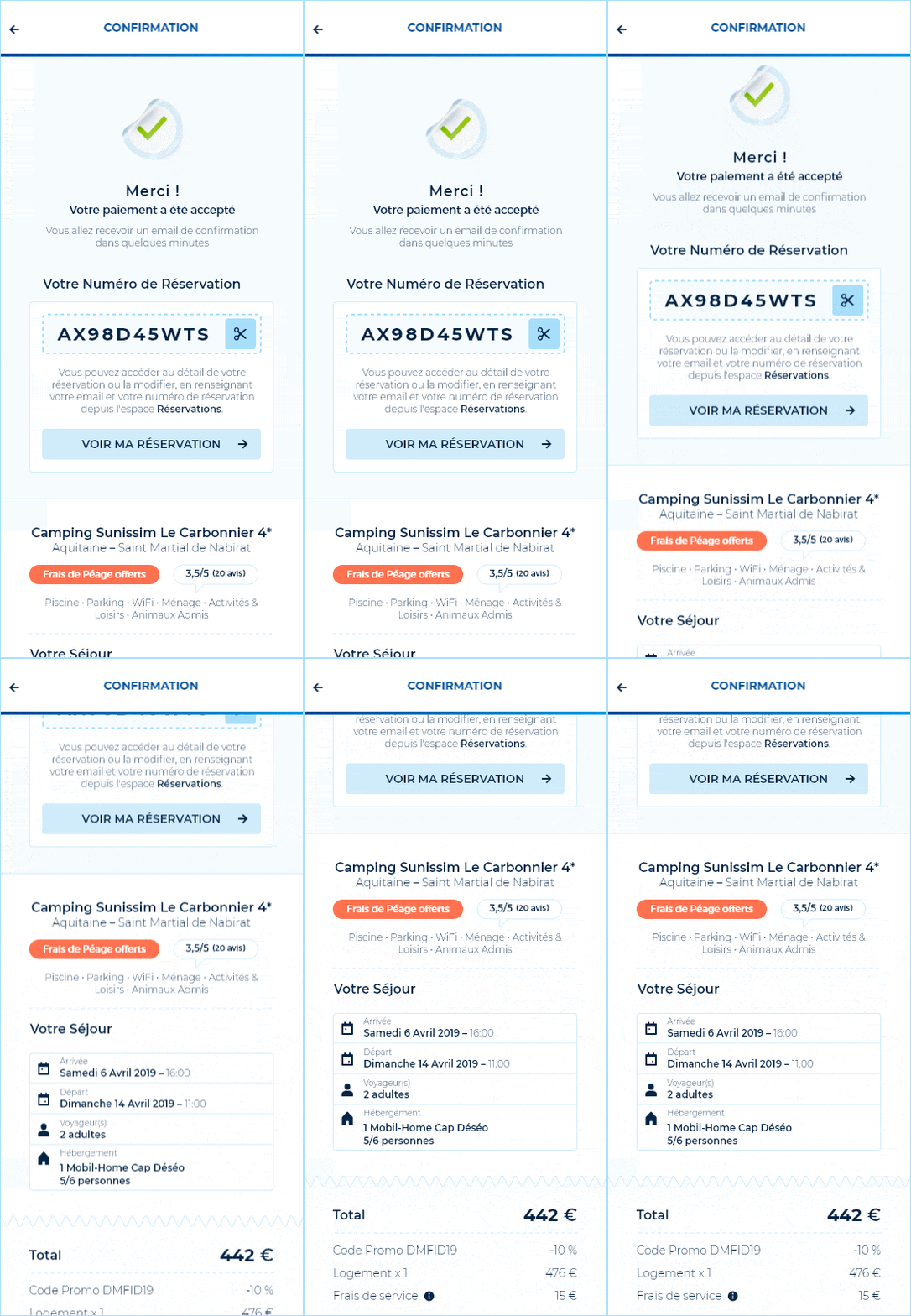
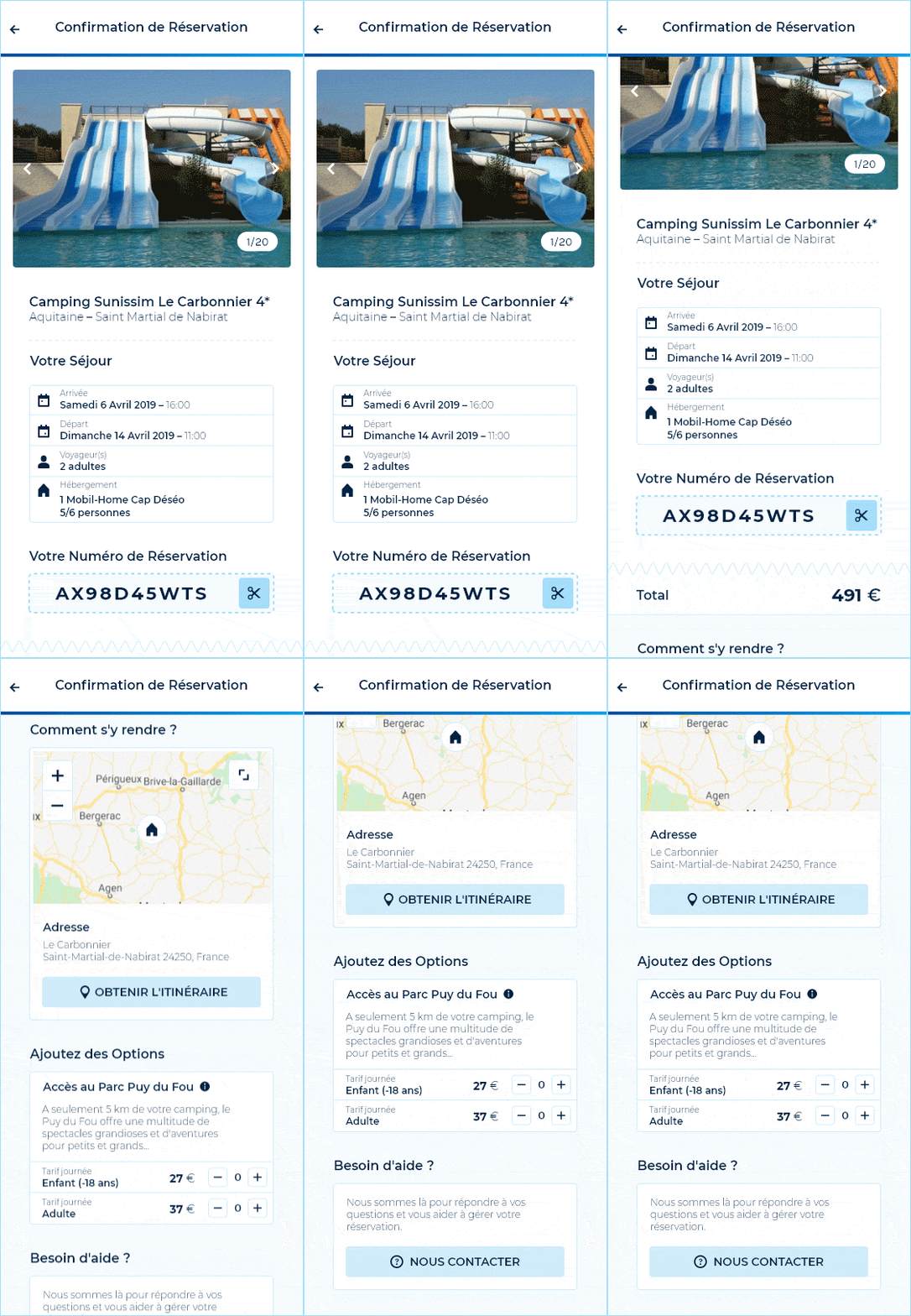
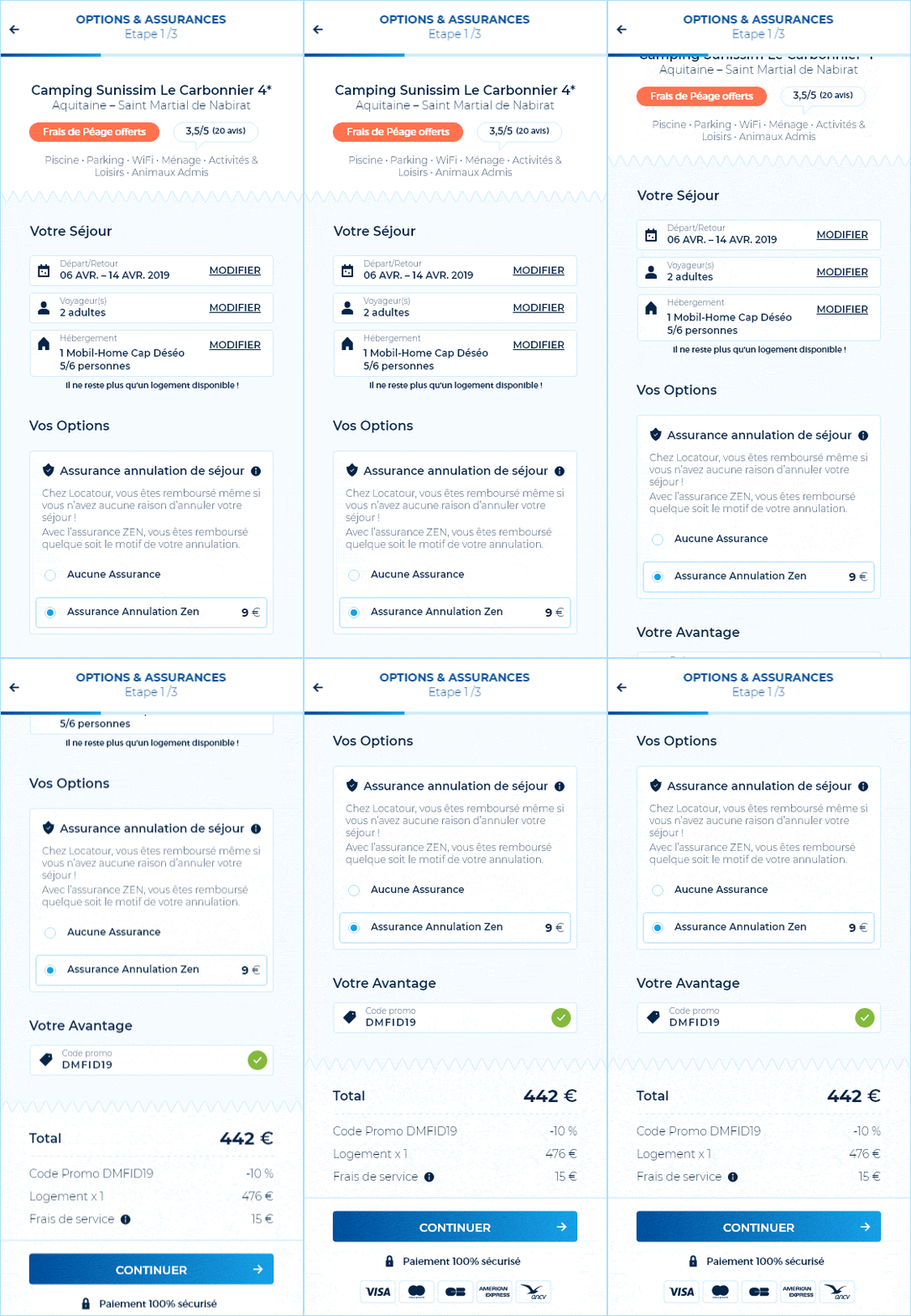
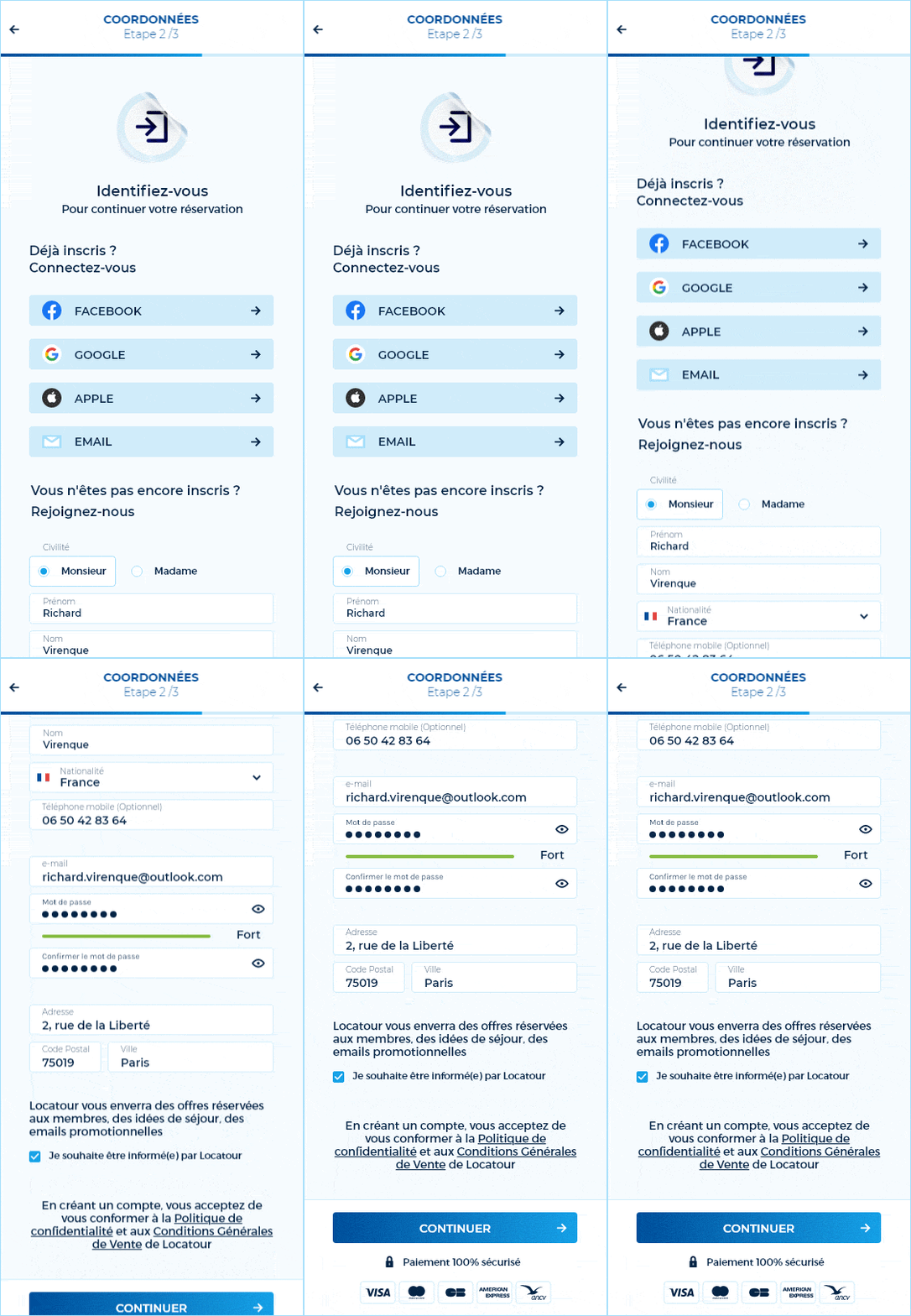
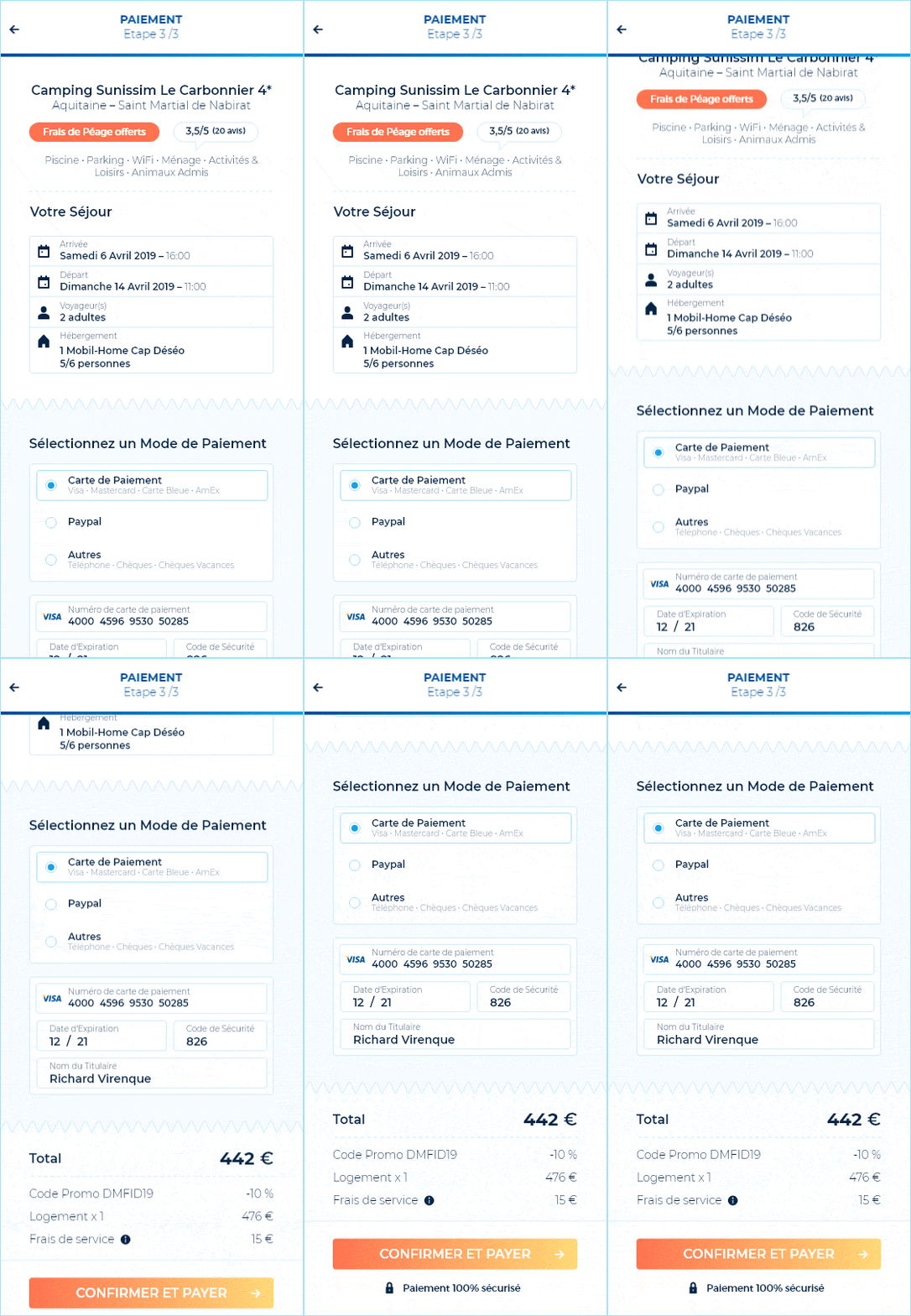
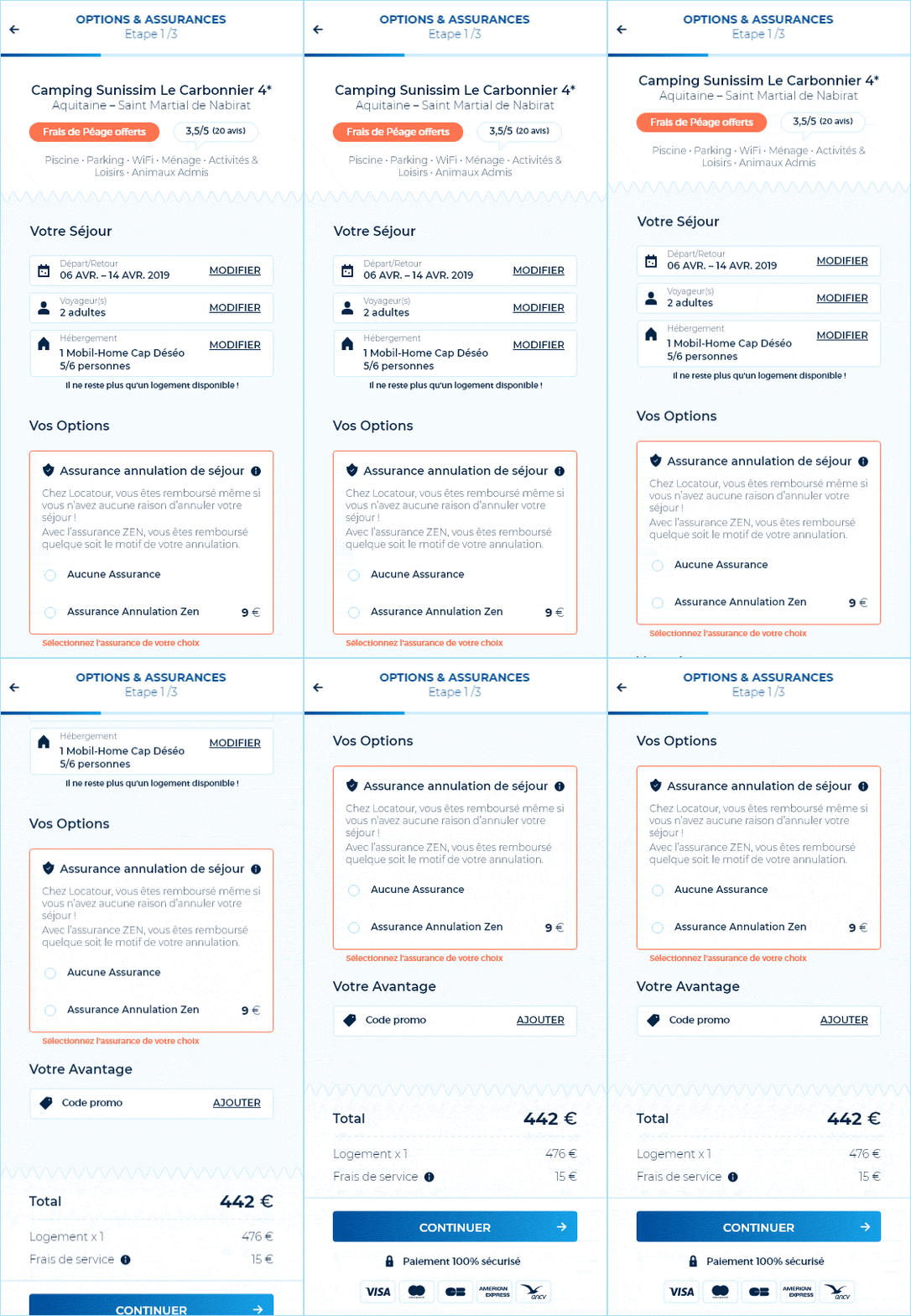
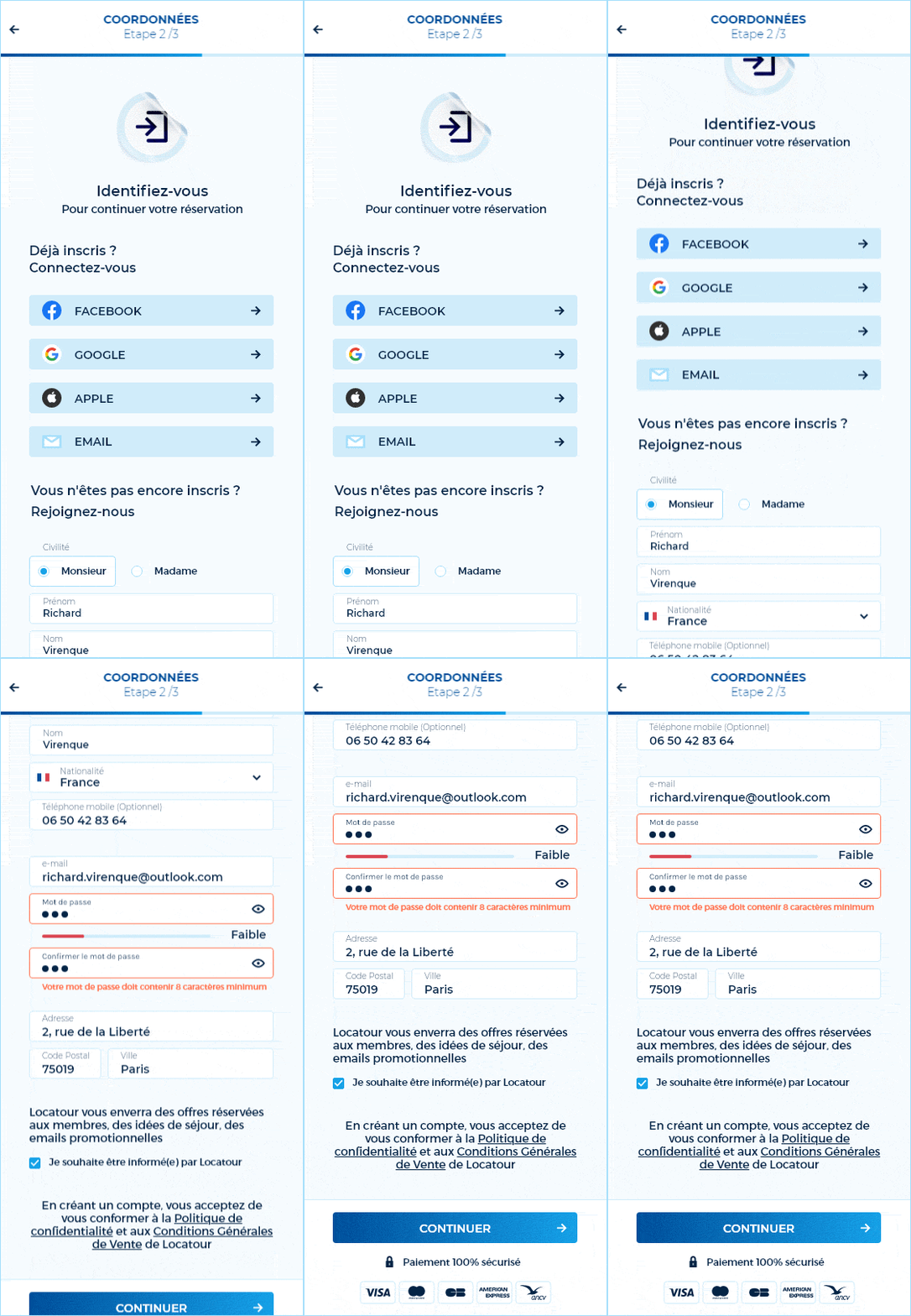
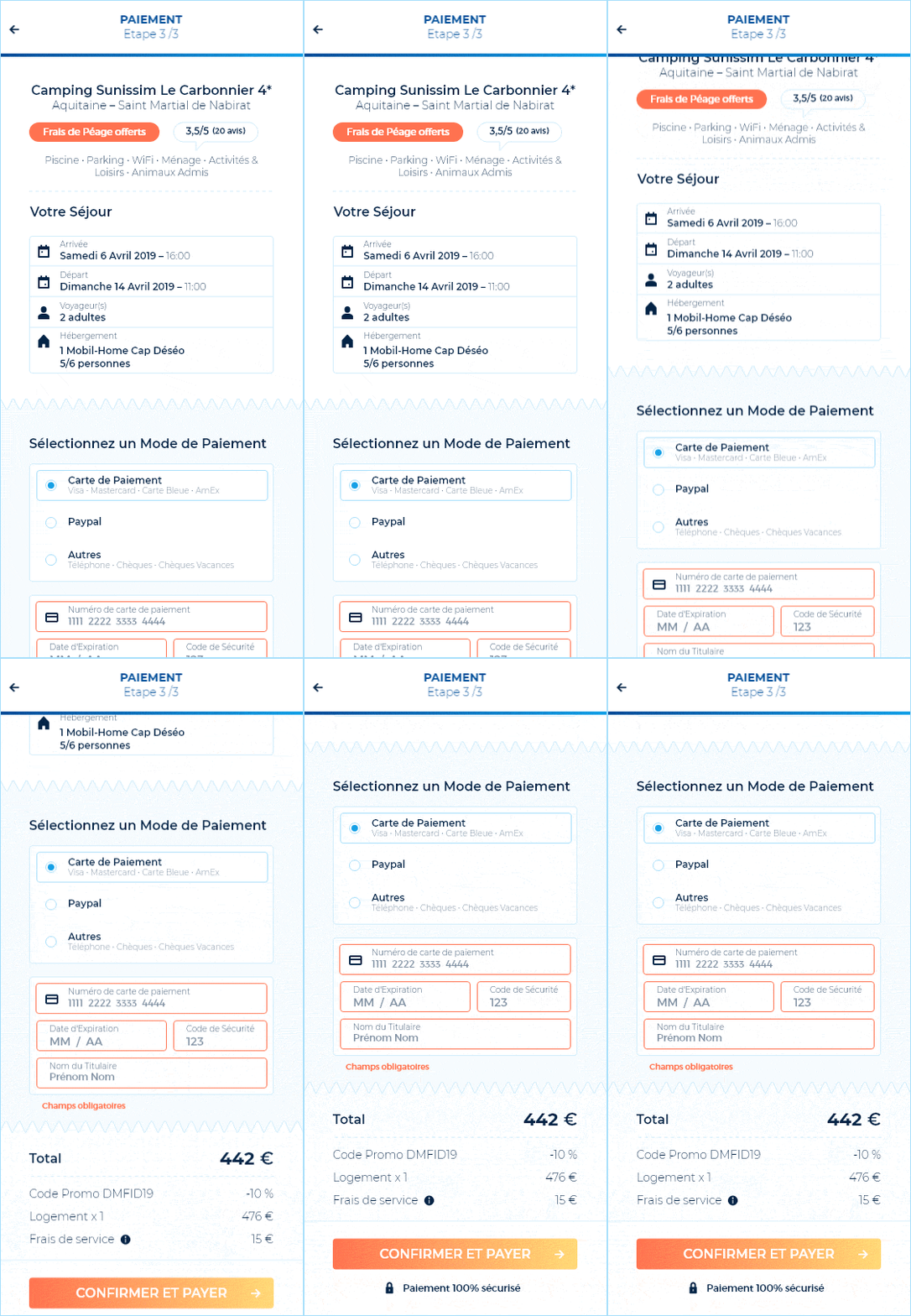
Booking is the stage where hesitation can easily turn into drop-off. The objective was therefore to create a checkout experience that felt simple, secure, and trustworthy, from the final accommodation review to payment and confirmation. Clear payment reassurance, optional cancellation coverage, and fast sign-in methods were introduced to reduce friction and support completion.
Contact Me